
The Digital Resource Hub every early childhood educator Needs
If you're looking for high-quality early childhood education resources, you're likely hoping for more than activities that “fill time.”
You want lessons that engage children, align with EYLF outcomes, help you integrate technology confidently—and support your growth as an educator.
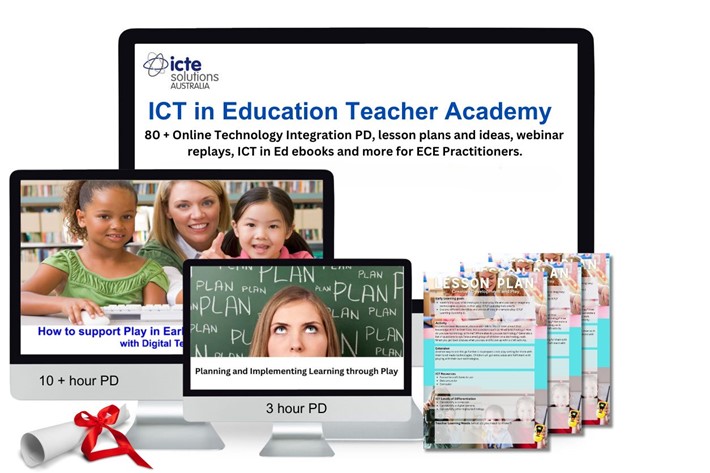
That’s exactly what the ICT in Education Teacher Academy membership was created to deliver.
It’s not just a collection of digital lesson plans. It’s a complete system of teaching support that wraps every activity in tools for reflection, assessment, extension, and real professional development.

Every Journey Starts with one lesson plan—and builds from there
Inside the membership, your learning journey begins with one choice:
Which lesson plan suits your children, topic, curriculum goals, and the ICT tools you have available?
That decision is supported from the moment you enter the membership. You can select your lesson plan:
-
From the Preschool Technology Activities library
-
Or directly from an ECE workshop (e.g. Science and Technology in Early Childhood Education)
Each workshop connects theory to practice, giving you the research and pedagogical grounding behind the resource. And once you've chosen your lesson, everything in the membership supports you to succeed with it.
Why the lesson plans are the foundation of everything in your membership
At the heart of the ICT in Education Teacher Academy membership is a growing library of intentional, curriculum-aligned lesson plans.
These are not generic activity ideas. They are early childhood education resources designed specifically to integrate digital technology in early learning—with clarity, purpose, and structure.
Each lesson plan helps you:
-
Meet EYLF learning outcomes
-
Apply ICT tools in developmentally appropriate ways
-
Scaffold learning for different capabilities
-
Encourage inquiry, creativity, and digital exploration
-
Reflect, assess, and adapt your teaching
-
Grow as a confident educator using technology in early childhood education
But what makes these lesson plans truly different is how they are embedded within a broader system of professional growth.
What every membership lesson plan includes
| Feature | What It Does |
|---|---|
| Learning goals (EYLF-linked) | Each lesson starts with clearly defined early learning outcomes, so you know exactly what you’re targeting |
| Step-by-step procedure | Designed with real classrooms in mind—provides a practical and flexible flow for implementation |
| ICT Levels of Differentiation | Helps you adapt the activity for children with emerging, developing, or advanced digital skills |
| Extension ideas | Encourages follow-up learning and sustained inquiry, not one-off lessons |
| Ideas for adapting to your context | Practical options if you have limited tech or mixed-age groups |
| Resources list for digital tools | Directly connected to everyday ICT tools for early childhood education—tablets, cameras, apps, IWBs, etc |
Going beyond the lesson—how each plan links to your professional growth
Every lesson plan in the membership includes two powerful sections that make the experience go deeper than delivery:
✏️ Connecting This to Your Professional Growth
This section invites you to take the lesson further by:
-
Exploring the matching ECE workshop to understand the educational theory behind the activity
-
Reflecting on your use of digital tools and strategies
-
Asking questions in the Community Forum or sharing adaptations
-
Searching for extension ideas in the Wisdom Tool
-
Posting reflections, photos, or documentation with peers
This is where the professional learning journey begins.

📘 Workbook Guidance
Every lesson also includes a Workbook Guidance section that shows you how to document, track, and reflect on the lesson using your membership workbook.
It tells you:
-
Which workbook pages to use (e.g. Planning Template, Assessment Template, Differentiation Table)
-
Which APST standards the lesson connects to
-
What to reflect on—and how to do it meaningfully
-
How to track your growth using the TPACK Radar Chart
-
Where to record extensions, feedback, and community discussions
This is the difference: you're not just teaching. You're learning, reflecting, and growing—with every resource you use.
📈 Want to preview the workbook?
📘 Click here to view an example
Examples of lesson plans across key learning areas
Here are just a few examples of lesson plans included in the membership, organised by key learning areas in early childhood education. Each one is designed to integrate digital tools meaningfully while meeting EYLF outcomes:
| Key Learning Area | Lesson Plan Title | Activity Description | Linked Early Learning Goals |
|---|---|---|---|
| Science & Technology | Sorting Animals | Children classify animals using digital images they search for or photograph themselves. They insert these into a sorting table using basic publishing software. | EYLF Outcome 4.2, 5.5 |
| Creative Development | Abstract Art with Bee-Bot | Children attach markers to a Bee-Bot and program it to draw shapes and patterns, combining coding with creative expression. | EYLF Outcome 4.1, 5.4 |
| Language & Communication | Speech Bubbles & Storytelling | Children take digital photos and use simple software to add speech bubbles, sequencing images into a digital story. | EYLF Outcome 1.3, 5.2 |
| Numeracy | Roll a Shape and Trace It | Children roll a digital dice to generate a shape, then trace or draw it using a Bee-Bot or drawing app. | EYLF Outcome 4.1, 5.4 |
| Physical & Outdoor Play | QR Code Nature Hunt | Children scan QR codes hidden in the outdoor space to receive visual or audio clues, integrating digital literacy with physical movement. | EYLF Outcome 2.4, 4.4 |
Each lesson is supported by planning templates, observation tools, and workbook prompts to help you document, adapt, and reflect on your practice.
These examples also reflect the framework outlined by Howell (2013) for developing a digital pedagogy in early childhood education:
-
Creative activities (e.g., Abstract Art with Bee-Bot, Speech Bubbles & Storytelling) allow children to explore and express using digital tools.
-
Experimental activities (e.g., Roll a Shape and Trace It, QR Code Nature Hunt) foster hands-on problem solving and exploration through digital engagement.
-
Purposeful activities (e.g., Sorting Animals) are structured to meet specific curriculum goals using ICT in authentic and meaningful ways.
This alignment ensures that each lesson plan not only supports children’s development but also builds your pedagogical understanding of technology integration in the early years.
Quick View: Your Teaching Journey with one ECE Lesson Plan
| STEP | YOUR ACTION | MEMBERSHIP SUPPORT |
|---|---|---|
| Choose your lesson | Based on topic, interest, learning goals, and ICT tools | Download from the activity library or ECE workshop |
| Plan and adapt | Use templates to scaffold for all learners | Workbook tools, ICT differentiation chart, EYLF mapping |
| Teach and assess | Apply with available tech in your setting | View demonstrations in early childhood education videos |
| Reflect and grow | Evaluate child outcomes and ICT use | Use assessment templates and reflection prompts |
| Extend and evolve | Build on success and share outcomes | Wisdom Tool, community posts, and APST-linked evidence logs |

Mia’s Story: From One Lesson Plan to Professional Confidence
Mia, an early childhood teacher, was exploring how to introduce science and technology to her 4–5-year-old group. She downloaded the “Sorting Animals” lesson plan from the Science and Technology in Early Childhood Education workshop inside the membership.
Here’s how she used the membership tools to turn one resource into a meaningful professional learning experience:
-
She opened her workbook and used the Lesson Planning Template to set her learning intention—focusing on animal classification and safe internet searching
-
Knowing her group’s varied digital skills, she used the ICT Differentiation Chart to scaffold the task: some children took photos of their pets, others searched online with help, and others inserted images into a table
-
As the activity progressed, Mia used the Observation & Assessment Template to track children’s science understanding and ICT capabilities
-
After the lesson, she used the Critical Reflection Prompts to evaluate what worked, what surprised her, and how the children used technology meaningfully
-
She then opened the Wisdom Tool, typed “digital photo storytelling,” and found a related idea in the Members’ Library. That sparked her next lesson extension.
-
Finally, Mia posted a reflection in the Community Forum, asking others: “How have you extended classification lessons using storytelling or coding?”
Over a few weeks, Mia didn’t just “use a resource.” She planned, implemented, reflected, and evolved her teaching—with everything she needed already built into the membership.
This is how one lesson plan becomes a pathway to professional growth.
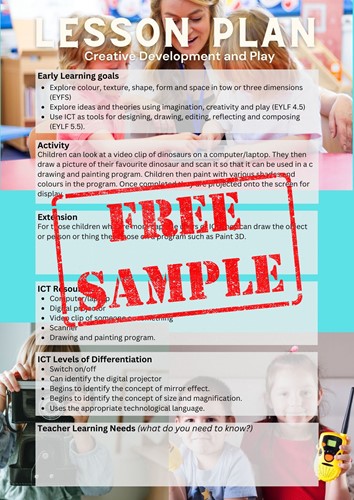
Try it for yourself
Download the “Sorting Animals” lesson plan and explore how this single resource leads to child learning and professional confidence—with the right tools to guide you.
Inside the membership, every resource leads to growth. Because when lesson plans are supported with structure, reflection, and direction—you don’t just plan a better lesson. You become a better teacher.
What would it look like if every digital activity you used with children also moved your professional practice forward?
Start today with the only membership designed to guide your entire journey of digital integration in early childhood education.
✨ Become a Member Now - Save $40 instantly when you pay annually!

eBooks That Support Early Learning Goals and Technology Integration
Becoming a member of the ICT in Education Teacher Academy gives you access to a growing collection of eBooks and downloadable PDFs focused on technology in early childhood education.
These resources help you understand how digital tools can support play, communication, creativity, inclusion, assessment, safety, and early learning goals in practical classroom situations.
For educators looking for early childhood education resources, the value is not only in accessing the eBooks, but in knowing how to use them as part of your professional learning.
Key Topics Covered Across Membership eBooks
The eBooks available inside the membership focus on areas that connect directly to everyday teaching, including:
- Supporting inclusion and diverse learning needs
- Using ICT to enhance communication and language development
- Planning meaningful learning experiences with technology
- Managing safety and ethical use of digital tools
- Observing, assessing, and responding to children’s learning
- Understanding how ICT supports development across the curriculum
- Digital play-based learning in early childhood education
For example:
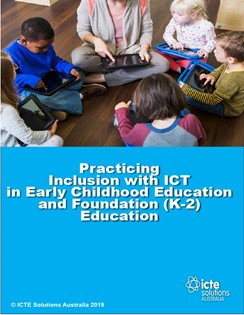
Supports educators in planning inclusive ICT learning experiences and adapting teaching to meet a wide range of needs.

Focuses on safe and appropriate ICT use, helping educators balance technology with children’s development and wellbeing.
These are the types of resources that help guide teaching decisions, not just provide ideas.
How You Are Guided to Access These eBooks
Inside the membership, eBooks are not something you simply browse and download.
They are part of a guided process that begins with your classroom needs.
Using the Wisdom Tool, you:
- Ask a question based on your teaching
- Read a clear, practical response
- Follow the referenced sources
Those sources often lead you directly to:
- Relevant eBooks
- Learning experiences
- Workshops and examples
This ensures that what you access is directly connected to what you need.
The Workbook: Connecting Your Learning to Practice
The Membership Workbook brings structure to everything you access.
It supports you to:
- Turn what you read into clear learning intentions
- Link ideas to early learning goals
- Observe how children respond during activities
- Reflect on what worked and what needs adjusting
- Build consistency in your teaching practice
This is where early childhood education resources begin to move from ideas into action.
Turning Professional Reading into Professional Growth
As a member, your reading becomes part of your ongoing professional development.
You are supported to reflect on:
- What you have learned
- How it connects to your teaching practice
- How it supports children’s learning needs
- What you can apply in your classroom
You are also guided to consider:
- What may impact your ability to apply new ideas
- What changes may be visible in your practice
- How you will evaluate success
- How you could share your learning with colleagues
This ensures that every eBook contributes to your development over time.
What You Get as a Member
All eBooks and PDF downloads inside the membership are included.
You are not purchasing individual resources.
Instead, you have ongoing access to:
- eBooks
- Lesson plans and learning experiences
- Workshops and training
- Planning and reflection tools
This allows you to revisit, apply, and build on what you learn at your own pace.
A Simple Way to Use These Resources
You might begin by asking a question in the Wisdom Tool.
From there:
- You are guided to a relevant eBook
- You apply one idea in your classroom
- You observe how children respond
- You reflect using the workbook
- You adjust your approach
This creates a cycle of:
👉 Learn → apply → reflect → improve
If you are already exploring early childhood education resources, you are already taking steps to strengthen your teaching.
The next step is knowing how to use those resources in a way that supports consistent learning, reflection, and growth—and having the structure in place to do that over time.
💡 Membership Access
- $20 AUD per month
- $200 AUD per year (best value — includes 2 months free)

Empowering Primary Teachers with Digital Tools
The ICT in Education Teacher Academy isn’t just an early years resource hub. It’s also designed to support primary school teachers in bringing purposeful, curriculum-aligned technology into their classrooms.
If you’ve been searching for practical, high-quality ICT lesson plans for teachers or wondering how to make the most of ICT in primary schools, this is where everything starts to click.
Bridging the gap in ict in primary education
Many primary teachers want to embrace digital technology—but lack time, support, or the right guidance. That’s where the membership becomes more than just access to resources. It becomes a learning path.
Within the membership, you’ll find:
-
Practical ICT lesson plans for primary classrooms
-
Evidence-based strategies that show the benefits of ICT in education
-
Instructional courses that build your knowledge and confidence
-
Tools to reflect on and improve your digital pedagogy
Your key resources: Literacy with ICT
These instructional courses are at the core of the membership’s primary education support. Each one provides practical strategies and downloadable activities tailored to your year level.
| INSTRUCTIONAL COURSE | KEY FEATURES |
|---|---|
| Year 1 Literacy with ICT | Guided introduction to digital storytelling and visual literacy |
| Year 2 Literacy with ICT | Activities that support early research skills and visual communication |
| Year 3 Literacy with ICT | Builds on multimodal text creation and web safety |
| Year 4 Literacy with ICT | Introduces critical thinking with digital tools and creative content creation |
| Year 5 Literacy with ICT | Focuses on ICT capability, collaboration, and purposeful online publishing |
Each course is supported by matching ICT lesson plans for teachers that directly align with literacy outcomes and ICT capabilities.
The Benefits of ICT in Teaching and Learning — Made Practical
What types of ICT do primary teachers use?
To make ICT integration relevant and achievable, the membership supports the practical use of tools already available in most primary classrooms, such as:
-
Interactive whiteboards and touchscreens
-
Tablets and laptops
-
Word processing and presentation software (e.g., Word, PowerPoint)
-
Drawing and mind-mapping tools
-
Digital cameras and microphones
-
Web research and safe online navigation tools
-
Educational software and games aligned to learning areas
These tools aren’t just used—they’re embedded purposefully into lesson plans and teaching strategies.
This isn’t about theory. It’s about action. Here’s how the membership helps primary teachers realise the benefits of ICT in teaching and learning:
-
Ready-to-use ICT resources for teaching and learning
-
Lesson plans tied to curriculum goals and digital capabilities
-
Real classroom examples in downloadable formats
-
Guidance on using everyday tools effectively (not just introducing new apps)
Each resource is built around the understanding of ICT in elementary education—where scaffolding, differentiation, and engagement matter most.
Supporting your teaching journey
When you join, you’re not navigating this alone. You’re supported with:
• Downloadable instructional guides and plans
• Step-by-step curriculum alignment with ICT
• Reflective workbook pages to track your confidence and growth
• Access to a professional community of educators working through the same challenges
From One Lesson to Professional Transformation: A year 4 example
Already read how this works for early childhood? Here’s how it applies to your primary classroom with just one lesson plan.
📘 Liam’s Story: How one lesson reshaped his digital teaching approach
Liam, a Year 4 teacher, had been using ICT occasionally but wanted to feel more confident embedding it into his literacy program. He joined the ICT in Education Teacher Academy and started with the Year 4 Literacy with ICT instructional course.
He selected the persuasive writing lesson plan that incorporated presentation software. But instead of stopping at the activity, Liam used the membership’s structured supports to elevate the experience:
-
Opened the instructional course to understand the pedagogy behind multimodal texts
-
Mapped out ICT learning goals using the workbook templates
-
Adapted the lesson using the ICT differentiation tool to suit a wide range of learners in his class
-
Watched a sample teaching video in the Members’ Library to see how other teachers modelled persuasive language and digital layout
-
Posted in the Community Forum for advice on incorporating peer feedback in digital presentations
-
Used the Wisdom Tool to locate a follow-up activity involving online safety for persuasive content
Within one term, Liam noticed his students engaging more deeply—not just with ICT, but with the purpose of their writing. His confidence as a teacher of digital literacy grew, and the reflections he captured in the workbook helped him align his teaching with school-wide professional learning goals.
A more confident approach to ICT integration—and documented progress toward school-wide teaching goals.
Why it works: not just a plan, a complete system
Every ICT lesson plan in the membership links to resources and action prompts that build your confidence and guide you forward. This isn’t just a set of ideas—it’s a connected system designed for real transformation.
| Step | What the Member Does | Membership Tool Used |
|---|---|---|
| 1 | Chooses Year 4 persuasive writing lesson | Literacy with ICT Course |
| 2 | Plans learning goals and ICT focus | Workbook templates |
| 3 | Adapts task for ability levels | ICT Differentiation Chart |
| 4 | Watches strategy demo | Members' Library |
| 5 | Seeks advice and ideas | Community Forum |
| 6 | Finds follow-up lesson | Wisdom Tool |
| 7 | Reflects and documents impact | Workbook reflection pages |
This kind of structured support is what turns everyday ICT into a powerful teaching strategy—aligned to curriculum and embedded in real growth.
Your next step: start with one resource
You don’t need to master everything at once. Start with the instructional course for your year level and try just one matching lesson plan.
📘 Want to teach digital literacy with confidence? The membership gives you ICT resources for teaching that help you do exactly that.
🎯 Get intentional. Stay aligned. And make digital integration achievable.
✨ Become a Member Now - save $40 instantly when you pay annually!
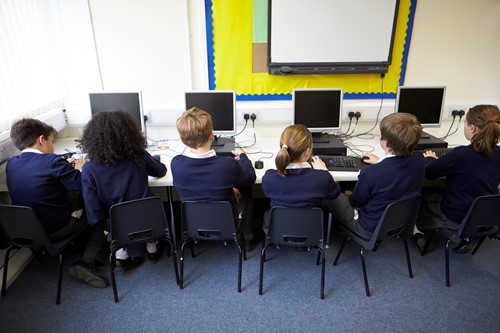
ICT in Education – The Big Picture
Information and Communication Technology (ICT) is transforming education at every level, from early childhood settings to primary and beyond. But why does ICT matter in education, and how can educators ensure they are using it effectively to enhance learning outcomes?
For educators, the challenge is not just about introducing digital tools into the classroom but also about using evidence-based strategies that support child development, enhance learning, and align with curriculum goals.
In this article, we’ll explore:
- The impact and benefits of ICT in education
- How ICT supports early childhood learning and development
- The role of ICT in primary education
- How educators can confidently integrate ICT with the help of the ICT in Education Teacher Academy!
By the end of this guide, you’ll not only understand why ICT matters but also have a clear pathway to harnessing technology effectively in your teaching.
What is ICT in Education?
ICT in education refers to the use of digital technologies—such as computers, tablets, interactive whiteboards, and software—to enhance teaching and learning.
Why is ICT Important in Education?
The impact of ICT in education is significant. Research highlights that when used appropriately, ICT can:
- Improve student engagement and motivation
- Support collaborative learning experiences
- Enable personalized learning paths
- Foster critical thinking and problem-solving skills
For educators, understanding the advantages of using ICT in the classroom is key to overcoming resistance and ensuring effective implementation.
How ICT Benefits Teaching & Learning?
- Enhancing engagement – ICT tools make learning interactive, fun, and meaningful.
- Bridging learning gaps – Students can learn at their own pace, reinforcing concepts.
- Developing digital literacy – Essential 21st-century skills are developed naturally.
- Supporting inclusive education – Assistive technologies help special needs students.


ICT in Early Childhood Education
Technology and Early Childhood Education: A Powerful Combination
As digital tools become increasingly embedded in our daily lives, technology and early childhood education are no longer separate conversations. Educators are now recognizing the need to integrate technology in ways that support, rather than replace, traditional learning methods. Thoughtfully embedding digital tools into play-based and intentional learning environments allows young children to develop essential ICT capabilities, preparing them for a digitally connected future.
When implemented correctly, technology enhances children's creativity, problem-solving skills, and communication while also supporting early literacy and numeracy development. This is why the ICT in Education Teacher Academy exists—to help educators successfully implement ICT in early childhood education through expert-led workshops, practical lesson plans, and a structured learning pathway via the membership workbook.
What is ICT in Early Childhood Education?
In early years settings, ICT goes beyond screens. It includes digital storytelling, programmable toys, digital cameras, and interactive resources that enrich play-based and intentional learning experiences.
The Benefits of Technology in Early Childhood Education
Reason 1
Firstly, young children are already being exposed to ICT tools and as such it already has an effect on them and on the environment and people that surround them.
ICT tools are becoming a ubiquitous component of the physical and social world. It is an important part of the private and work-life of most people, including young children.
Reason 2
This relates to the many opportunities and potential ICT delivers to the teaching and learning of the curriculum.
In early childhood, it can:
- Support and enhance learning and play experiences.
- Support and strengthen your professional learning as an early childhood teacher.
- Support and strengthen your relationships with parents and other people connected to your early childhood education centre.
Reason 3
Many curriculums are now supporting the integration of ICT across the education sector from early childhood to tertiary.
Research shows that the delayed attention to ICT in early childhood has given the sector an advantage that while in the past attention has been given towards getting ICT infrastructure into schools without pedagogical support, the reverse is now occurring.
Reason 4
ICT supports metacognition or ‘learning to learn’. It means knowing that you know and it provides the foundation to what an ICT capable child is.
REASON 5
The use of ICT in early childhood education supports many opportunities for creative development with young children. Through the use of ICT in role plays, they will employ imaginative thinking.
REASON 6
Language development is greatly enhanced when ICT is employed in learning environments. ICT tools and resources such as word processors may appear to be very basic, but remember the power of word processing is in the ease in which children can easily edit and change their writing whilst developing their language and literacy skills.
REASON 7
Children can increase their world knowledge through the use of modern technology such as the Internet.
REASON 8
The many features that ICT brings with it in the learning environment will in the end improve the fine and motor gross skills of children.
REASON 9
Mathematical development is also enhanced as a result of the visual images which computers can provide.
REASON 10
One of the many benefits that will come with the use of ICT in early childhood education is that of collaboration. This alone helps to build language with children in addition to developing their social skills.
These 10 reasons represent the benefits of integrating digital technology in early childhood education today and emphasise the benefits of planning to ensure that learning and playing are enhanced. Some other advantages include:
- Young students are generally more focused and attentive when there's technology involved compared to the traditional way of learning, which is using the whiteboard. One of the main benefits of involving technology is that it's more engaging and interactive, especially since your main competition is the boredom of students. With technology, this rarely ever happens since their focus is completely engaged.
- Technology also makes it possible for students to undergo training resources that are paperless. Teachers don't have to undergo the struggle of printing resources for students with their lessons. If it's paperless, it also makes things more convenient for both the student and the teacher.
- Technology also makes parents see the progress of their children. With modern technology today, communication is now made easy between teachers and parents. Parents can now keep track of their children's progress with technology.
How ICT Supports Learning & Development in ECE
- Boosts Communication & Language Skills – Interactive apps and storytelling tools like Book Creator support oral language development.
- Promotes Early Numeracy – Digital games & apps encourage mathematical exploration.
- Encourages Scientific Thinking – AR apps like Seek by iNaturalist allow children to explore nature with technology.
Inside the Membership:
The ICT in Education Teacher Academy provides:
- ECE workshops on technology-enhanced learning
- Preschool technology activities/lesson plans integrating ICT into play-based learning
- Guidance on aligning technology with EYLF & NQS
Join the membership and Access ICT resources for early years!
Enhancing Learning Through Preschool Educational Videos
Incorporating preschool educational videos into early childhood education can provide engaging, developmentally appropriate learning experiences that complement hands-on activities. When used intentionally, these videos can:
- Reinforce language development, storytelling, and communication skills.
- Support numeracy concepts such as counting, patterns, and shapes.
- Encourage curiosity about science and the natural world through interactive visual explanations.
- Provide social-emotional learning opportunities, helping children understand emotions, friendships, and problem-solving.
- Introduce digital literacy skills, guiding children to engage with media critically and responsibly.
However, simply using videos is not enough—educators must integrate them into a structured learning experience. That’s where the ICT in Education Teacher Academy can help.
Preschool Educational Videos in the ICT in Education Teacher Academy
As a member, you gain access to expertly curated preschool educational videos that align with early learning goals and EYLF outcomes. These resources can be found in the Members' Library, which includes:
- Storybox Hub: A collection of digital storytelling resources designed to enhance literacy development.
- Digital Play-Based Learning Videos: Explore real-world examples of how educators integrate technology in play-based learning.
- Technology & Language Development Workshop: Includes video resources on supporting early literacy with ICT tools.
- STEM & Digital Learning Videos: Featuring science, math, and digital technology activities for young learners.
- Exclusive Expert-Led Sessions: Learn from Dr. Kristy Goodwin, Sue Atkins, and other education specialists on how to effectively integrate media into early childhood education.
Best Practices for Using Preschool Educational Videos
To maximize learning outcomes, consider these strategies when using videos in your classroom:
- Active Engagement: Pause the video at key moments and encourage discussion or predictions.
- Hands-On Follow-Up Activities: Pair videos with practical activities, such as drawing a favorite scene or re-enacting a concept learned.
- Intentional Viewing: Select high-quality content that aligns with learning objectives and avoids passive screen time.
- Reflective Discussion: Ask open-ended questions like, “What did you learn from this video?” or “How does this connect to what we explored outside?”
- Family Involvement: Share selected videos with parents and encourage discussions at home to extend learning beyond the classroom.
Ready to Elevate Learning with Video?
By joining the ICT in Education Teacher Academy, you can access an extensive library of preschool educational videos and expert guidance to seamlessly integrate digital media into your teaching practice. Whether you’re looking to enhance storytelling, numeracy, science, or digital literacy, our membership provides the tools and support to make technology work for you.
💡 Click the button below to explore how you can access these valuable teaching resources!
Addressing ICT Challenges in Education
Despite its benefits, many educators face barriers when trying to integrate ICT into their teaching:
- Lack of Training – Many teachers feel unprepared to use technology effectively.
- Time Constraints – Finding quality ICT resources takes too much time.
- Overwhelming Choices – Uncertainty about which tools are best for their students.
🔑 Solution: The ICT in Education Teacher Academy!
- Step-by-step professional development for confident ICT integration.
- A structured learning path with the Membership Workbook.
- A supportive community of educators sharing best practices.
By joining, you will have instant access to:
- Technology workshops for teachers covering ICT across all subjects.
- Online training in ICT teaching strategies.
- Lesson plans & templates for ECE & primary educators.
- A growing library of expert presentations & bonus content.
Join the Membership and Start Today!
Ready to Take the Next Step?
🔹 Want weekly insights? Subscribe to the blog for exclusive updates.
🔹 Need ICT resources? Become a member & unlock expert-led training.
📌 Join thousands of educators transforming their classrooms with ICT!
👉 Subscribe and stay updated!
👇 Become a member and start learning!