
10 ICT Lesson Ideas to Inspire Learning and Creativity in Early Childhood
In early childhood education, digital technologies are no longer just additions—they’re key tools for enhancing learning. The ICT in Education Teacher Academy offers lesson plans that do more than integrate devices; they help educators embed digital learning in meaningful, age-appropriate ways. If you’ve been searching for ICT activities for kindergarten that are practical, creative, and developmentally appropriate, the ten examples below offer immediate inspiration.
Below are ten engaging lesson plans that show how ICT enriches creativity, communication, problem-solving, and exploration in ECE settings.
1. Colouring in Blank Images
Children use a digital drawing program to colour in plain images they’ve chosen online. As they explore fill tools, brush strokes, and colour palettes, they begin developing visual planning and digital coordination. It’s not just about colouring—it’s about making decisions, navigating software, and learning how to express creativity using ICT.
Educators scaffold the activity with demonstrations and prompts like “What colours will you choose?” or “Try a different brush tool.” For more advanced learners, the challenge can be extended by inviting them to draw their own original image first, then colour it digitally
2. Colourful Chemistry – Fireworks in a Jar
This vibrant outdoor experiment teaches scientific inquiry through a mix of oil, water, and food colouring. As colours explode through the water, children observe, predict, and photograph the reactions using a tablet.
The experience deepens when children create a digital story of their observations using apps like Book Creator. They narrate what happened and why, reinforcing both science understanding and digital literacy skills
3. Predictive Texts for Language Play
Children are introduced to the concept of predictive text using a mobile phone, then simulate the experience with magnetic boards. They explore how typing one letter can lead to automatic word suggestions, sparking conversations about language, meaning, and digital communication.
This hands-on literacy activity connects everyday tech with symbolic play. Educators encourage children to respond with imaginative text, enhancing their awareness of how digital tools support writing and communication
4. Reading a Digital Book
In this lesson, children listen to and respond to a story from a digital book. After reading, they engage in retelling and sequencing using verbal storytelling or a drag-and-drop app.
Through discussion, prediction, and digital interaction, children explore narrative structure and symbolic meaning. The activity builds comprehension, vocabulary, and confidence using technology to express ideasReading a digital book.
5. Spelling Out Names with Bee Bots
Children use programmable toys like Bee Bots to spell their names. Letters are scattered in a circuit, and children must plan the bot’s movement to reach each letter in order.
This activity merges robotics, language, and problem-solving. As children develop directional language and spatial reasoning, they’re also building early programming skills in a fun, meaningful contextSpelling out names.
6. Creative Digital Painting: Multiple Techniques
Using a program like Paint 3D, children explore brushes, colours, and stamp tools to create original artwork. They experiment freely and even try painting 3D shapes.
The activity develops creative expression and design thinking. Educators can scaffold learning by introducing specific tools gradually or inviting children to share their digital art and explain their processPreschool creative acti….
7. Abstract Art with Bee Bots
This lesson transforms Bee Bots into art tools by attaching coloured markers to them. As children program the bots to move while music plays, they observe the lines created and interpret them as abstract art.
It’s a powerful blend of creativity, motion, and technology. Children engage in open-ended play while learning how digital tools can be used artisticallyPreschool lesson plan A….
8. Creating with Shapes Using Paint 3D
Children use drawing software to design images using 2D shapes. The lesson encourages the exploration of patterns, symmetry, and symbolic representation.
The digital medium allows children to edit, resize, and reposition shapes—introducing early numeracy and design principles in an engaging formatPreschool lesson plan f….
9. Outdoor Digital Storytelling
Armed with tablets, children explore their surroundings to capture natural sounds—birds, rustling leaves, or trickling water. They then use Book Creator or iMovie to craft stories inspired by their recordings.
This activity encourages oral language development, sensory awareness, and digital storytelling. Children are supported to reflect on how sound influences their stories and how technology helps bring those stories to lifeOutdoor digital storyte….
10. QR Code Nature Hunt
Children use tablets or smartphones to scan QR codes hidden in nature, each revealing facts about insects, plants, or weather. They problem-solve in pairs, scan codes, and share their discoveries through storytelling or drawing.
This interactive activity builds digital literacy and environmental awareness while promoting collaborative learning and inquiryQR code nature hunt.
From Simple Tech Use to Meaningful Learning: How This Lesson Can Grow
Let’s take the Abstract Art with Bee Bot activity and show how it can grow with your confidence and teaching goals. This isn’t just a one-off creative task—it can evolve to support rich learning experiences, deeper engagement, and even cross-curricular outcomes.
| STAGE OF TEACHING PRACTICE | WHAT THE LESSON MIGHT LOOK LIKE | HOW TO TAKE IT FURTHER | THE DEEPER LEARNING IMPACT |
|---|---|---|---|
| Getting Started | Children use Bee Bots to draw while music plays. | Model how the Bee Bot works. Let each child take turns to create marks. | Children begin understanding basic programming and using ICT for expression. |
| Building Confidence | Children choose their own colours and decide how to move the Bee Bot. | Encourage children to plan a path or respond to music with different commands. | Supports creative decision-making and shows how movement affects visual outcomes. |
| Linking to Broader Learning | Children work in groups to create collaborative artwork or connect it to a story or song. | Add storytelling, early maths, or visual arts goals to the activity. | Helps children connect ICT with communication, sequencing, and collaboration. |
| Creating Lasting Impact | Children plan their own art activity and teach others how to do it. | Display their creations in a digital slideshow or invite another class to explore. | Builds leadership, reflection, and confidence while integrating ICT across subjects. |
Reflection Tip: What learning goals did this activity support? How did ICT make that learning more creative, collaborative, or meaningful?
Want help tracking how your lessons grow like this? Inside the ICT in Education Teacher Academy, members use a workbook that shows them how to reflect, adapt, and build on each lesson they try.
 Are You Creating an Effective Early Childhood Learning Environment?
What is an early childhood learning environment?
An early childhood learning environment is a nurturing space designed to support the holistic development of young children. It includes classrooms, play spaces, areas for caregiving routines, and outdoor areas—all of which must be safe, engaging, and inclusive to foster learning and development.
In early childhood education, creating an optimal learning environment is critical for setting children up for success. The early years shape a child’s cognitive, social, and emotional growth, making it essential for educators to implement key strategies that ensure a conducive learning environment.
However, designing an effective early learning environment that integrates technology can be challenging. Educators often wonder how to balance digital tools with play-based learning, ensuring that children develop ICT skills without compromising their natural curiosity and exploration.
The ICT in Education Teacher Academy provides training and resources to help educators design and implement technology-rich learning environments in their early years settings, ensuring children develop digital skills in age-appropriate and meaningful ways. Through structured professional development, ICT workshops, and the membership workbook, educators can learn how to create a balanced digital learning environment that enhances children's growth while ensuring play-based and inquiry-driven learning remains at the core of early childhood education.

Creating an Independent Technology-Rich Learning Space
Building a safe, functional, and engaging ICT space within an early learning environment requires planning and adherence to best practices:
-
Familiarize yourself with regulations related to ICT use in early childhood settings.
-
Prioritize children’s safety when integrating digital tools.
-
Select high-quality ICT resources, avoiding outdated or second-hand hardware.
-
Use the DATEC criteria when choosing educational software to ensure quality learning experiences.
-
Design an ICT-friendly learning space with:
-
Safety as the first priority.
-
Functionality and flexibility for easy integration into different activities.
-
Manageability, starting with a simple setup such as a single computer or tablet.
-
Proper lighting and organization, including safe cable management.
-
Child-friendly height adjustments, especially for interactive whiteboards.
-
-
Clearly establish ICT usage rules for both children and educators.
-
Provide diverse ICT tools that support independent and collaborative learning, such as:
-
Everyday technology for role-play (e.g., toy cash registers, keyboards).
-
Computers, printers, webcams, and microphones.
-
Digital cameras, moviemakers, and interactive whiteboards.
-
Programmable toys and touch-responsive learning tools.
-
Through the ICT in Education Teacher Academy, educators receive step-by-step guidance on how to set up and optimize ICT learning spaces, ensuring a seamless and structured integration of technology into everyday classroom activities.

How Can ICT Support Learning in Early Childhood Education?
What is ICT in early childhood education?
Incorporating ICT in early childhood education (ICT in ECE) is more than just using technology; it's about integrating meaningful digital experiences that enhance children's learning and development. ICT tools such as tablets, interactive whiteboards, and digital storytelling platforms provide opportunities for problem-solving, creativity, and collaboration.
Why is ICT important in early childhood education?
Early childhood educators understand the importance of play-based learning, but many question how to effectively incorporate ICT without it becoming a passive experience. When integrated correctly, ICT supports hands-on, active engagement, fostering:
-
Early literacy and numeracy skills through interactive games and storytelling.
-
Social development and collaboration as children work together on digital projects.
-
Creativity and innovation, using digital art, music composition, and coding activities.
What are the benefits of ICT in early childhood education?
The benefits of ICT in early childhood education include:
-
Exposure to digital tools from an early age, as ICT is already a part of children’s everyday environments.
-
Enhancing teaching and learning opportunities by providing interactive and engaging learning experiences.
-
Supporting professional development for educators, allowing them to use ICT to improve their teaching strategies.
-
Aligning with national curricula, ensuring children develop essential 21st-century skills.
-
Encouraging metacognition, helping children develop their ability to reflect on their own learning.
-
Promoting creativity, particularly through role-play and digital storytelling.
-
Enhancing language development, as ICT supports writing and editing skills.
-
Expanding children’s world knowledge by enabling exploration beyond the classroom.
-
Improving fine motor skills through the use of touchscreens and digital tools.
-
Encouraging collaboration, which helps build both language and social skills.
How does the ICT in Education Teacher Academy ensure these benefits are delivered?
The ICT in Education Teacher Academy provides structured pathways, resources, and training to ensure educators successfully implement ICT in a way that supports these benefits. Members gain access to expert guidance, interactive lesson plans, and an active learning community, ensuring they can confidently create technology-rich learning environments.

Struggling to Integrate Technology in Early Childhood Education?
Many educators struggle with how to introduce ICT in preschool and kindergarten classrooms in a way that aligns with early childhood pedagogy. Questions often arise about which digital tools to use, how to maintain active learning, and how to balance screen time effectively.
A Digital Storytelling Example from the Membership
One of the most engaging ICT activities for preschoolers and kindergarten is digital storytelling. A simple lesson plan might include:
-
Using a tablet or interactive whiteboard to allow children to create a digital book.
-
Encouraging oral storytelling and narration as children record their voices.
-
Incorporating images, drawings, or simple animations to bring their stories to life.
-
Connecting to EYLF Outcome 5 by supporting communication, multimodal literacy, and technology use for meaning-making.
This activity is just the beginning of your ICT journey in the membership.

Supercharging Your Knowledge as a Member
-
Access the Full Digital Storytelling Workshop – The ICT in Education Teacher Academy includes a complete ECE workshop on Digital Storytelling, where you’ll learn strategies to take this lesson further.
-
Expand Your ICT Pedagogy – Members also gain access to additional early childhood pedagogy workshops that help them design an effective early childhood learning environment using ICT.
-
Structured Professional Development – The membership provides a success path and workbook, ensuring you continue learning and refining your ICT integration strategies beyond a single lesson plan.
-
Community & Expert Support – Engage with other educators, ask questions, and receive ongoing mentorship through the membership’s professional educator network.
This means that as a member, you’re not just collecting activity ideas—you’re developing a deep, structured understanding of ICT in early childhood education that will transform your teaching and create lasting impacts in children’s learning experiences.
Facing Challenges When Using ICT in Early Years?
Overcoming Common Barriers in ICT Integration
Even though educators recognize the importance of ICT in early childhood education, many face challenges when implementing technology effectively in their learning environments. The most common barriers include:
-
Lack of confidence and training – Many early childhood educators feel uncertain about how to use ICT tools effectively in play-based learning.
-
Access to quality professional development – Finding structured ICT training that aligns with early childhood pedagogy can be difficult.
-
Time constraints – With so many demands in the classroom, educators struggle to find time to explore ICT strategies and lesson planning.
-
Concerns about screen time – Balancing interactive technology use with hands-on, play-based learning remains a key challenge.
How the Membership Helps You Overcome These Barriers
The ICT in Education Teacher Academy is designed to eliminate these challenges and empower educators with practical, hands-on solutions:
-
Step-by-Step Training & Lesson Plans – Access a growing library of ICT lesson plans, including EYLF Outcome 5 activities, ICT activities for preschoolers, and ICT activities for early years.
-
Targeted Professional Development Workshops – Workshops focus on play-based ICT integration, helping educators use technology in ways that enhance—not replace—learning experiences.
-
Flexible Learning for Busy Educators – The membership provides self-paced training, allowing you to learn at your own pace and implement ICT strategies in a way that fits your schedule.
-
Ongoing Expert Support & Community – Unlike one-off ICT workshops, the membership gives you continuous access to expert educators and a supportive community where you can ask questions, share ideas, and refine your teaching approach.
By joining the ICT in Education Teacher Academy, educators move beyond the barriers of ICT integration and gain the confidence to create engaging, technology-rich early childhood learning environments.
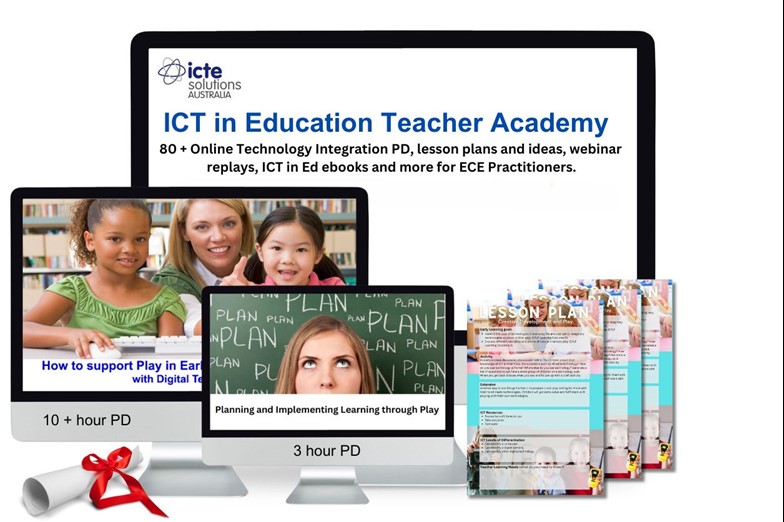
How Does ICT Truly Support Children's Learning?
The effective integration of ICT in an early childhood learning environment isn’t just about access to technology—it’s about how educators use it to enhance learning, engage students, and build essential skills. Without the right professional development and support, many educators struggle to maximize ICT’s potential in meaningful ways.
The ICT in Education Teacher Academy provides the pathway to success, ensuring that:
-
Educators receive continual professional development tailored to early childhood settings.
-
ICT is embedded within structured lesson plans that align with curriculum requirements.
-
Members follow a guided success path, allowing them to develop confidence in technology integration at their own pace.
-
Ongoing support from a professional educator community ensures teachers never feel isolated in their ICT journey.
Take the Next Step in Your ICT Integration Journey
If you want to transform your early childhood learning environment into a thriving, technology-rich space that truly supports children's learning, then ongoing professional development is essential.
The ICT in Education Teacher Academy gives you the tools, training, and resources you need to succeed.
Join today and take your ICT integration to the next level. Click the button below to become a member!